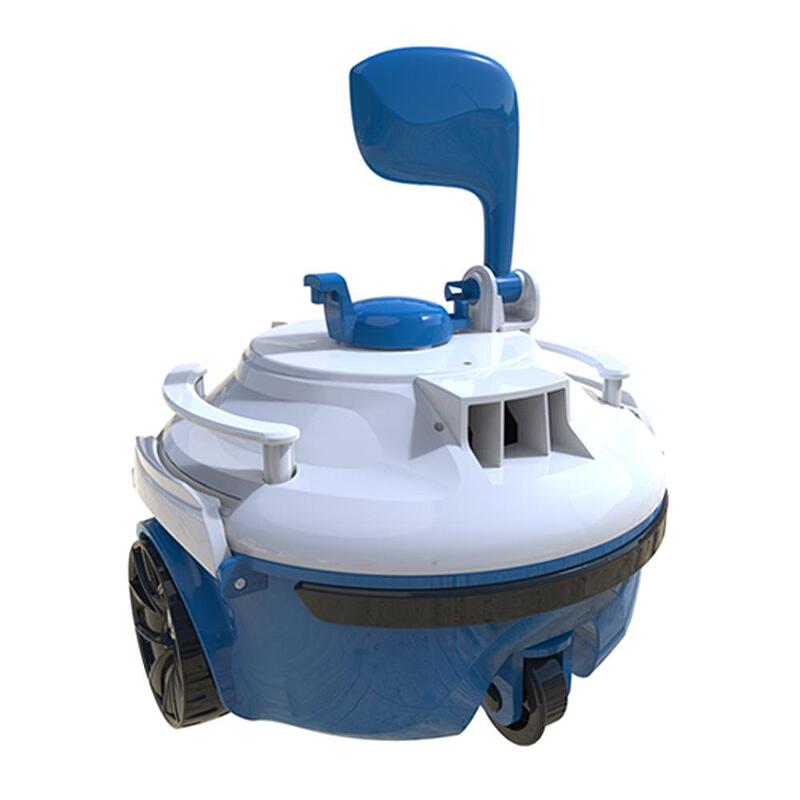
The technology behind a robotic pool cleaner's movement is what distinguishes a simple and frustrating device from a truly "smart" device that offers an unrestricted experience. Programming and navigation are key to not just ensuring that the pool is in good condition but also how effectively and thoroughly it's cleaned. Understanding these systems is the key in choosing a robot that will navigate your pool's unique layout effectively, conserve energy, and spare you the stress of constantly untangling cords and repositioning the device.
1. The main navigation types are random in contrast to. intelligent.
This is the primary gap in the field of robotic technology for cleaning.
Random (Bump-and-Switch/Bump-and-Turn): Entry-level and older models use this method. The robot will move in a straight line until it comes into contact with an obstacle or wall before turning to a random location and continue. The robot isn't efficient, misses many spots, is slower and consumes more power. It could get stuck and repeat areas that were previously cleaned.
Smart (Algorithmic/Systematic): Mid-range to premium models use advanced navigation. It can be powered by gyroscopes, optical sensors, accelerometers, or algorithms in software that determine the dimensions of the pool. The robot is guided by a predetermined pattern to efficiently clean such as a full-length scan of the floor, followed by wall climbs on grid. This will ensure complete coverage and avoid repetition for the shortest amount of time possible.
2. Gyroscopic navigation explained.
It is a favored and very efficient method of navigation. The robot contains a gyroscope that acts like an internal compass. It monitors the robot's position and rotates with extreme precision and allows it to be in straight lines and take calculated turns to form a precise grid pattern across the floor of the pool. It is not affected by water clarity or light levels, which makes it extremely reliable.
3. The Non-Negotiable Swivel Cord.
Unrelated to navigation intelligence The swivel function is crucial. Because the robot is always moving and changing direction it will cause the cable to twist. A swivel mechanism integrated into the float or connector allows the cable to rotate freely 360 degrees, keeping it from becoming knotted, tangled or tied around the robot itself. A tangled cord will reduce the reach of the robot and could cause it to get stuck. It could also lead to cord damage.
4. Wall Climbing and Transition Intelligence
The robot's ability of moving from the floor and wall backwards is an important task in programming.
Detection: Robots that are advanced utilize a combination of sensor information as well as motor feedback in order to determine the presence of walls within their path.
Ascent/Descent : They employ their water thrust and drive tracks to climb effortlessly. The best models can cleanse right up to the waterline, pause to descend slowly without falling down and possibly throwing up debris.
Cleaning the Cove: The transition point from the floor to the wall (the "cove") is the perfect place to dump debris. The navigation system incorporates an operation which is programmed to clear the area.
5. The Anti-Stuck and Obstacle Avoidance Features.
There are obstacles in pools like ladders, main drains, and steps. Programming can help mitigate issues.
Software Logic : Smart robots can recognize the moment they're stuck (e.g. the drive wheels will spin, but they won't move) and follow a set of steps to get out, which includes shifting directions and reversing their direction.
Sensors - Certain high-end machines feature sensors that are facing towards the front to spot obstacles before they get hit, which allows for cleaner and more efficient cleaning.
Design: Robots come with low-profile designs, rounded edges and other features that allow them to glide over obstacles without becoming stuck.
6. Cleaning Cycle Programming, Customization and Configuration.
Modern robots come with multiple cycles pre-programmed that can be chosen according to the need.
Quick Clean (1 Hour): For a rapid daily touch-up. Focusing primarily on the pool floor.
Standard Clean (2-2.5 hours) A thorough cleaning of floor and walls as well as the waterline by following an orderly pattern.
Floor Only Mode: Use this mode to use this mode when the walls and floor are clean, but the floor is filthy. This can save both energy and time.
Weekly Cycle/Extended cleaning: This is a longer cycle, which permits deeper cleaning and generally requires more attention to the walls.
7. The Impact of Navigation and Energy Consumption.
Smart navigation and energy efficiency are directly connected. Since a system-wide robot covers the pool completely with no redundant routes and completes its task in a shorter, predictable timeframe. A robot with random paths can take between 3 and 4 hrs to do what a smart nav robot can accomplish in 2 hrs which means it consumes more energy.
8. The role of drive systems: Tracks or Wheels? Wheels.
The manner in which you drive your vehicle affects the capability to climb and navigate.
Rubber Tracks - Provides excellent traction to all surfaces, however it is particularly effective on fiberglass and vinyl. They're excellent for climbing up walls and getting through obstacles. They are typically found on more robust high-end models.
Wheels: They are available on numerous models. These can be very effective but they can be a bit difficult to grip when used on smooth surfaces. This could result in falling and less effective wall climbing.
9. Waterline Cleaning Programs
This is the hallmark of programming that is advanced. Robots don't just randomly hit the waterline; they have been specifically programmed to do that. The most effective models stop their climb when they reach the waterline and boost the brush speed or suction force. They then move around the perimeter of the pool for a predetermined time to clean the scum off.
10. Scheduling your week weekly is the best method to "Set it and forget it".
A robot that has an automatic timer for the week built-in is the pinnacle of convenience. This lets you program the robot to automatically start the cleaning process on certain days and at particular times (e.g. on a Monday or Wednesday and Friday at 10:00 am). It is possible to automatize the pool cleaning process through programming the robot in a way it can automatically begin the cleaning process on certain dates and at specific time periods (e.g. on a Monday or Wednesday, and on Fridays at 10:00 AM). Only robots with stable, intelligent navigation will be able use this feature since you won't always be present to help if they get stuck. Have a look at the top rated conseils pour le nettoyage de la piscine for blog examples including cheap pool cleaners, any pool, pool cleaner store, aiper robot, best way to clean swimming pool, pool by you, in your pool, the pool cleaner, pool cleaning how to, swimming pool service companies and more.

Top 10 Tips For Simple Use And Maintenance Of A Pool Cleaning Robotics
Although cleaning is the primary goal but the everyday experience of using a robotic pool cleaner is determined by its user-friendliness and upkeep. A robot that's difficult to clean, store, or operate will cause frustration and negate the convenience it promises. The ease with which the robot can integrate into your pool maintenance program will determine whether it is a hassle or not. To prolong your enjoyment and ensure that you get the most of your investment, you need to look for features that are easy on the user.
1. The Critical Weigh and Handling Test
You'll interact with your robot most when you lift it into and out of a pool. It is vital to consider the weight of your robot.
Weight Range: Robots are able to range from a manageable 15-16 lbs to a massive 35-40 lbs. Heavier models are often stronger and more robust but can be difficult for certain users to lift, especially when wet and slippery.
Handles & Grips: Check the style. There are at least two ergonomic and well-designed handles which provide a firm grip. A badly placed handle on a heavy product makes it difficult and unsafe to carry. This is crucial to ensure ergonomics.
2. The Non-Negotiable Top-Loading Filter System:
This is the most important maintenance element. The filters should be opened after lifting the robot. Top-loading models allow you to effortlessly clean the filters, without having to turn the robot over. Flipping over a filthy, bottom-heavy robot can be a hassle and messy. It might fall, overflowing debris into your pool, or even onto your deck. Top loading makes it easy and effortless loading.
3. Filter Cartridge Maintenance and Longevity
The filters are a consumable item and their maintenance is a recurring job.
Cartridges can be easily removed from their casings. The pleated paper and fine-mesh cartridges are easy to remove from their casings. It is recommended to thoroughly wash them using a hose until water is clear and all dirt has been taken away.
Replacement Schedule: Paper Cartridges can be fragile and are susceptible to degradation over time as they are washed repeatedly. They typically need to be replaced at least once every season, based on usage. The best mesh cartridges last many seasons. It is important to consider this price when purchasing.
4. The cords can be twisted - a must To Have!
This feature can prevent tangling which can be a big problem for those using. A swivel mechanism where the cord is connected to the robot or its floating allows the cable to rotate freely 360 degrees when the robot shifts direction. If the cord is not equipped with an swivel mechanism can become knotted and twisting which reduces the range of your robot which can cause it to get stuck and damaging the wiring inside.
5. A Storage Caddy Can Change Your Life:
A bag with a designated storage space is much more than a mere accessory. It's an improvement in usability.
Transport: You don't need to lift the robot by its entire mass to get it from its storage towards the poolside.
Storage: When the robot is not in use, it provides the space for the robot to be stored. The cord is neatly wrapped so that it's not tangled. This prevents the robot sitting directly on the surface, thus protecting its components. Caddy models are a sign of a company's dedication to delivering the best user experience.
6. Cable Management and Length
The power cord is a critical part of a system.
Adequate Length The cable should be long enough to reach from the GFCI power outlet all the way to the most distant point of your pool without some slack. To connect the cable to your deck, measure your longest edge of your pool and include some feet. A cable that is too short makes the robot ineffective.
Floatation: The cables must be equipped with foam floats along the length. This stops the cable from sinking into track or drive of the robot, which could cause damage or cause tangling.
7. Cleaning Cycle Simplicity and Control:
The interface for robots must be easy to use.
On-Unit Controls Vs. Simple models could have only one button. Some models have a smartphone app or remote control for choosing cycles. There is a choice between a button that is simple or an remote control that comes with advanced programming.
Cycle Clarity: The cycle available (Quick Cleaning, Full Cleaning, Floor Only etc.) must be clearly identified and readily selectable. The robot must give clear and precise feedback whenever it starts (e.g. blinks or beeps).
8. Brush and Drive Component Wear and Access
While it is not a routine task, the brushes and tracks can be worn.
Inspection: You need to examine the brushes regularly (e.g. if the bristles are becoming shorter and stiff) as well as the tracks and wheels to look for signs of deterioration.
The simplicity of replacing components is an advantage. Check to see whether there are brushes, tracks and drive belts available from the manufacturer. Also, check the instruction manual for clear directions on how to get them replaced. It is possible to reduce the cost of servicing and extend the lifespan of your device by taking this step.
9. Physical Storage Requirements
You must have a space to store your robot.
Space: The robot's power supply and the cable coiled must be stored in a cool, dry and secure area like a shed or garage. The cable should not be exposed to direct sunlight. UV rays have been known to degrade plastics, and the cable sheathing will eventually be damaged.
Off-season Storage: for long-term storage in winter, the unit should be cleaned thoroughly and dried. The manual will provide specific guidelines. In most cases, the manual will advise storing your unit in a way that protects internal components.
10. The User Manual Ecosystem and Customer Support:
Then, the ease of use is supported by good documentation and support.
Clarity of Manual An informative manual with clear troubleshooting instructions as well as explanations for error codes and diagrams are essential for solving minor problems yourself.
Accessibility to Support - Review the brand's customer support reputation. Are there helpful websites or FAQs, instructional videos, or a phone number for customer service? If something goes wrong, accessible and knowledgeable support is vital to ensure a pleasant experience. Take a look at the top rated productos para limpiar paredes de piscinas for website advice including pool waterline cleaner, pool cleaner store, pool robot, max pools, aiper robotic pool cleaner, waterline pool, cleaning robot for pool, pool skimming robot, the swimming pools, robot to clean the pool and more.